


Building materials — 100% recycled textile waste
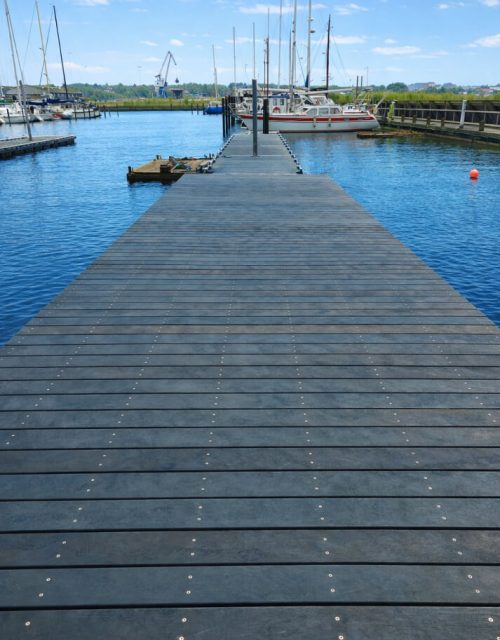
Bathing Jetty & Marina


Maintenance-free materials for environments close to water. Made from recycled textiles and plastic film – with no added binders. Developed for high wear resistance, low maintenance, and a long service life in demanding environments.
Applications
Built for water, weather, and wear
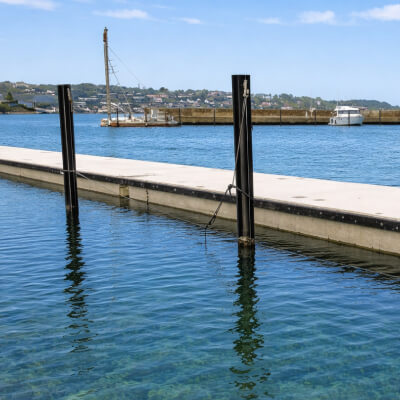
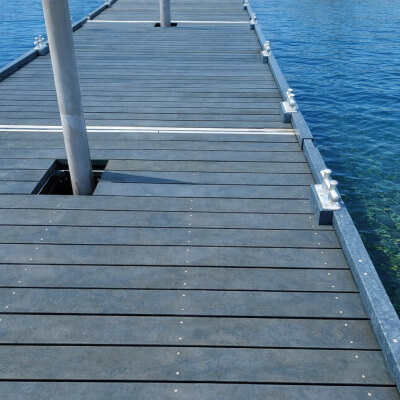
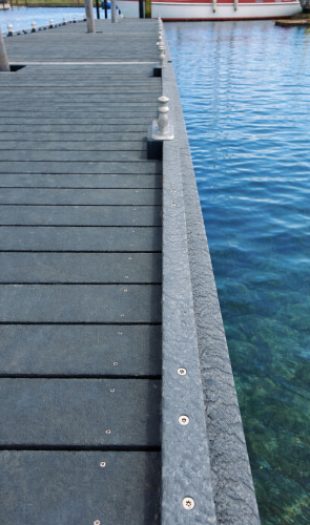
Materials for bathing jetties and marinas place specific demands on durability, safety, and maintenance. Retextil is developed specifically for these environments. The material is not affected by moisture like wood and requires minimal maintenance over time – while contributing to a more circular solution.


















100% recycling
How it is recycled
From textile waste to robust profiles that withstand water, weather, and daily use in marinas and along the coast.
Applications
A material designed for water and weather
Why is the material suitable for bathing jetties and marinas?
How does maintenance compare with wood?
Unlike traditional timber solutions, Retextil does not require oiling, painting, or ongoing treatment. The surface can be cleaned as needed, but no maintenance is required to preserve function or service life. This reduces both operating costs and time spent – especially in public and maritime environments.
What do we know about the material’s origin and process?
The material is produced from textile and plastic film waste with documented origin. The waste is collected and pre-sorted in Denmark and fine-sorted in the EU before being converted into new profiles. The entire process is traceable, and documentation is prepared to support requirements for material selection in both public and private projects.

Recycling
waste-based
Additives
added
FAQ
Frequently asked questions
Get answers to the most important questions about maritime possibilities with Retextil – including installation, durability, and practical use.
1. What makes Retextil suitable for bathing jetties and marina facilities?
Retextil is particularly suitable for environments close to water because the material is water-repellent, dimensionally stable, and does not degrade like wood. It requires minimal maintenance and retains its properties in both salt and freshwater.
2. How does the material perform in damp and wet environments?
The material does not absorb water in the same way as wood and is therefore resistant to rot, fungal growth, and frost cracking. This makes it ideal for structures that are constantly exposed to moisture.
3. Is Retextil slip-resistant?
Yes – the surface can be supplied with slip-resistant properties, which is important for safety on bathing jetties, walkways, and marina installations.
4. How does durability compare with wood?
Retextil has a significantly longer service life than traditional wood in exposed environments. It requires neither oiling, painting, nor ongoing treatment and retains both strength and appearance over time.
5. Can the material be used for load-bearing structures?
Yes – Retextil can be used for both load-bearing and non-load-bearing elements such as posts, decking, cladding, and walkways, depending on dimensioning and design.
6. How does the material affect the environment in marina areas?
Retextil is made from textile waste and helps reduce the amount of waste sent for incineration. At the same time, it avoids chemical impregnation, which is otherwise often used in wood for outdoor applications.
7. What maintenance requirements are there?
Very limited. Typically, regular cleaning is sufficient. There is no need for ongoing treatment, which reduces both operating costs and resource consumption.
8. Can Retextil be recycled after use?
Yes – the material can be re-granulated and incorporated into new products. This makes the solution circular and suitable for projects with a focus on sustainability and documentation.
Solutions for waterside environments
Do you have a project by the water?
Retextil is developed for outdoor use in demanding environments such as marinas, bathing jetties, and coastal facilities.
Contact us for advice on material selection, dimensions, and application in your project.