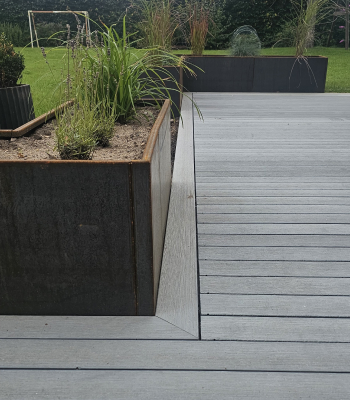
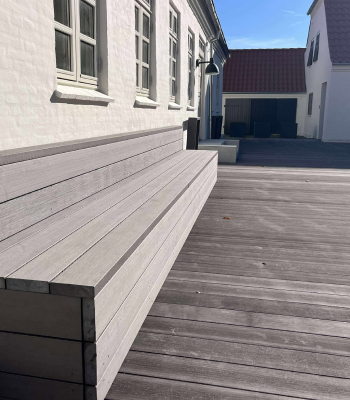
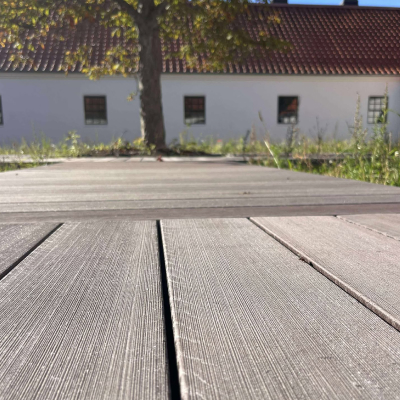
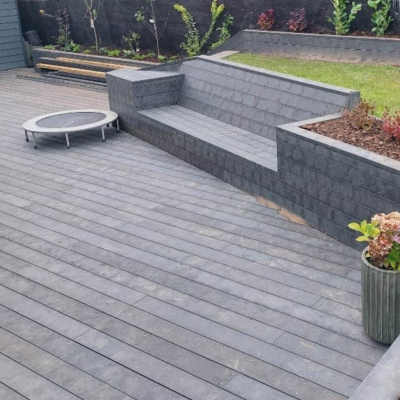
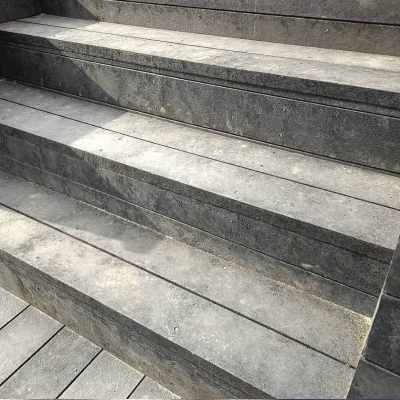
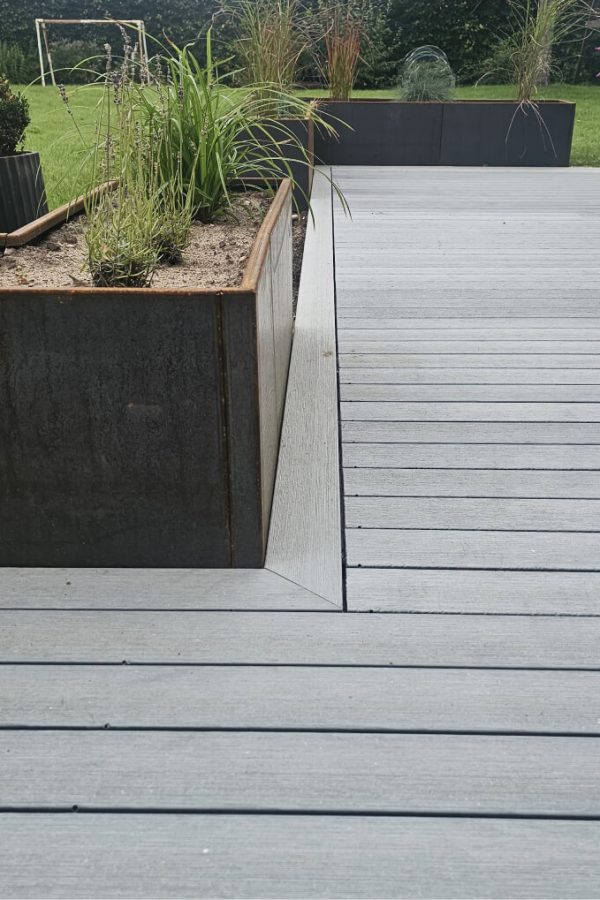
Retextil can be processed and installed in the same way as wood—without the need for oil, paint, or ongoing maintenance.
This provides a stable, uniform deck with a long service life.
COMPLETED PROJECTS
Decking in practice
See how Retextil is used in various decking projects—from private solutions to larger installations.
The material is not affected by water and is well suited to Danish climate conditions.
Long service life
Designed for many years of use without ongoing replacement.
Recycling
0%
waste-based
Additives
0%
added
FAQ
Frequently asked questions
Get answers to the most common questions about decking boards made from recycled textiles—from installation and maintenance to service life and applications.
1. How does Retextil differ from wooden decks?
Retextil looks and can be worked like wood, but requires no oil, paint, or ongoing maintenance. The material is more dimensionally stable and is not affected in the same way by moisture and weather.
2. Does a Retextil deck require maintenance?
No. One of the greatest advantages is that the material requires no treatment. Regular cleaning is usually sufficient.
3. Can Retextil withstand Danish weather?
Yes. The material is developed for outdoor use and is resistant to moisture, temperature fluctuations, and normal wear.
4. Does the surface become slippery in rainy weather?
Retextil has a texture that provides good footing, even in wet conditions. This makes it suitable for decks, walkways, and outdoor living areas.
5. How is a Retextil deck installed?
The material can be installed using the same principles as wood, making it easy for both professionals and experienced DIY users to work with.
6. What is the service life of a Retextil deck?
Retextil is designed for a long service life without ongoing maintenance. This makes it a robust solution compared with traditional materials.
7. How does the material contribute to better resource utilisation?
Retextil is made from textile and plastic waste that would otherwise typically be incinerated or landfilled. The material gives the waste a new function in construction with a long service life.
8. Can the material be recycled again?
Yes. Retextil can be re-granulated and used in new products, supporting a circular approach to material use.
SUBHEADER FOR TEXT
If you have questions about the process or our materials, please contact us
Sed ut unde omnis iste natus sit volur tatem accus antium laudan totam aperiam eaque ab veritatis et beatae vitae dicta sunt explicabo.