From textile waste to building materials

How textile waste becomes new materials

What happens to textile waste once it’s collected? Some is reused. But the vast majority still ends up as waste—often incinerated or exported without real recycling. Retextil takes a different approach. Through a coherent value chain, textile waste is transformed into new materials with a long lifespan and real-world applications.

waste-based material
0 %
added additives
123

A coherent value chain

Retextil works with a coherent approach.

By combining sorting, technology, and material expertise, textile waste is transformed into new building materials with a long lifespan. Here’s how the process fits together—from collection to finished product.

Retextil_Indsamling

01.

Collection – where does the textile waste come from?

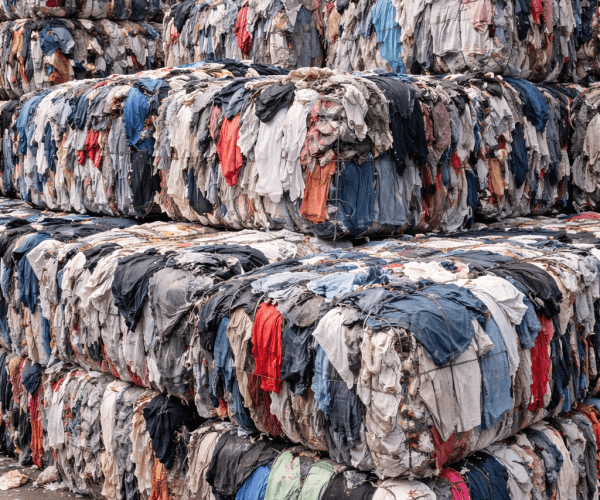
Retextil works with textile waste from both businesses and public-sector actors in Europe.

This can include surplus stock, discarded textiles, or materials that can no longer be reused in their original form.

With new EU requirements for separate collection of textiles, volumes are growing significantly.
That calls for solutions that don’t just handle the waste—but make it possible to use it at scale.

Retextil_Grovsortering

02.

Coarse sorting – the first step toward new use

After collection, the textiles go through an initial coarse sorting.

Materials that can be reused directly are sorted out.
The rest is prepared for further processing.

This is where the foundation is laid for turning textile waste into a consistent, usable resource for production.

Retextil_Finsortering

03.

Fine sorting – precision and material expertise

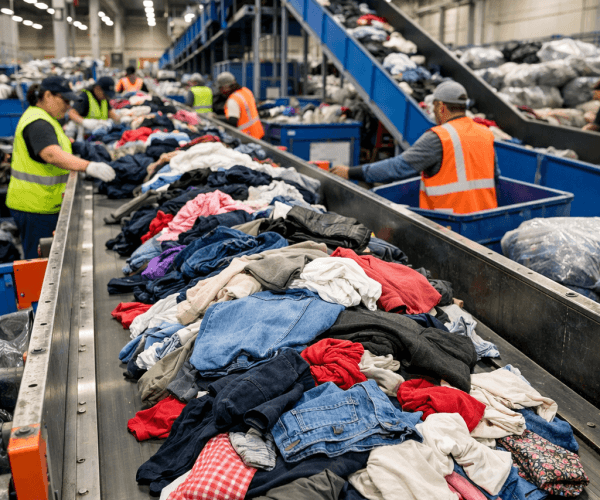
After coarse sorting, the textiles are separated even more precisely by fibre type and quality.

Using technology such as NIR scanning—combined with manual sorting—the materials are divided into specific fractions.

This ensures the right materials move forward in the process and is crucial for producing stable, consistent building materials.

Retextil_Granulat

04.

From textile to raw material

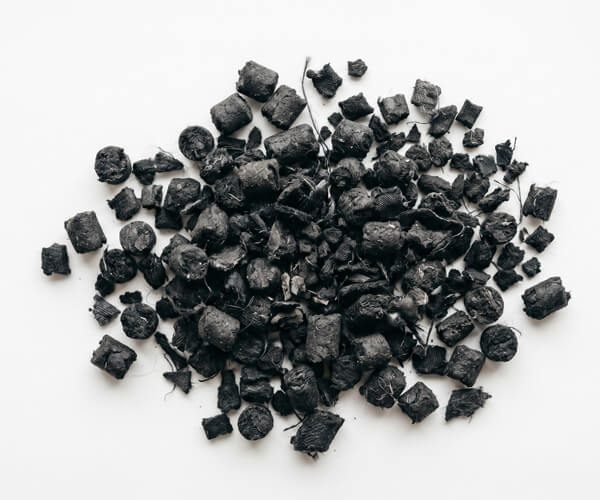
The sorted textiles are turned into a new raw material through shredding and granulation.

Here, textile fibres are combined with plastic fractions to create a stable composite material with consistent properties.

This is the core of Retextil’s approach to cross-cycling:
turning textile waste into a new, usable raw material in other material cycles.

Retextil_produktions bånd

05.

Production – new materials take shape

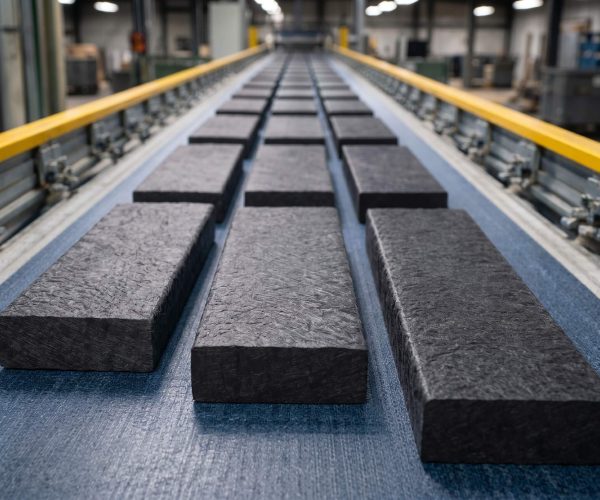
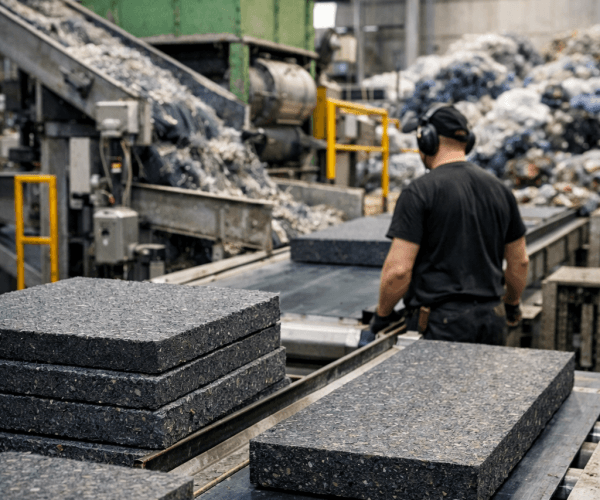
The raw material is processed through extrusion into finished profiles and building materials.

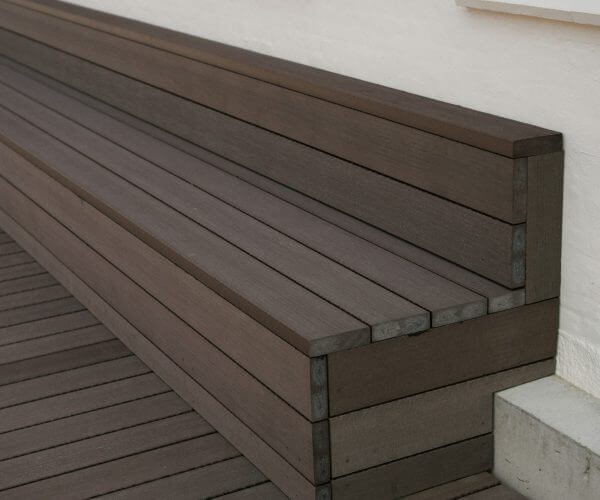
The materials are used in structures such as decking, fencing, and façade cladding, and are designed to be durable, maintenance-free, and weather-resistant.

This is where the value chain ends—where textile waste becomes new materials with real-world applications.

Retextil_fra affald til funktion

06.

Use – from waste to function

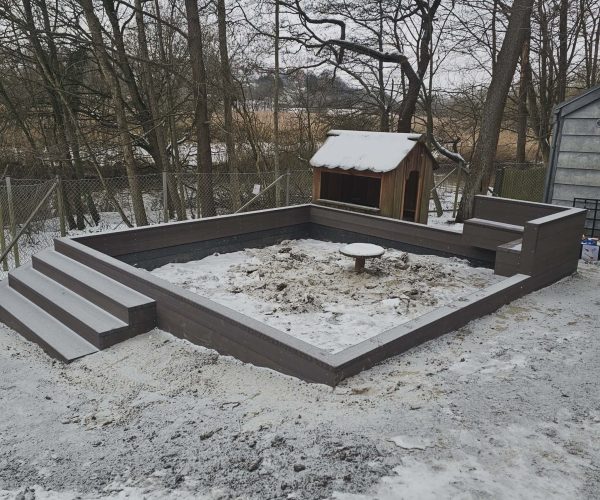
The finished materials are used in everything from decking and fencing to façade cladding and other outdoor structures—both in private and professional projects.

The materials replace traditional solutions such as wood while giving new life to textiles that would otherwise have ended up as waste.

This isn’t textile-to-textile recycling, but cross-cycling: where the value in the material is preserved and converted into a new function with a long lifespan.

Sandbox Børnehuset Overåen, Kolding

07.

A realistic approach to circularity

Textile-to-textile recycling features heavily in the debate—but in practice, only a small share of textile waste is suitable for that type of solution.

That’s why Retextil works with a different approach: finding applications that can handle large volumes while creating durable products with real function.

It’s not the ideal circular model—but it is a realistic, scalable solution.
A form of cross-cycling, where resources are used as effectively as possible and given new life in a new context.

Retextil_affald

08.

From waste management to value chain

Retextil doesn’t just work with materials—but with the entire value chain from waste to finished product.

By linking collection, sorting, documentation, and production, a solution is created that works in practice and at scale.

It’s this connection that makes it possible to move textile waste from waste management to a genuine resource in both municipal and commercial systems.

CONTACT US

Want to know more?

Would you like to learn more about how textile waste can be used in new materials—or how the solution can be applied in practice?

Scroll to Top