Façade cladding in recycled materials – durability without maintenance
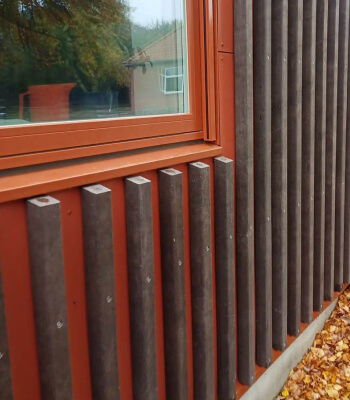
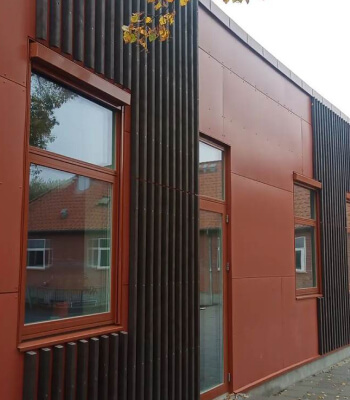
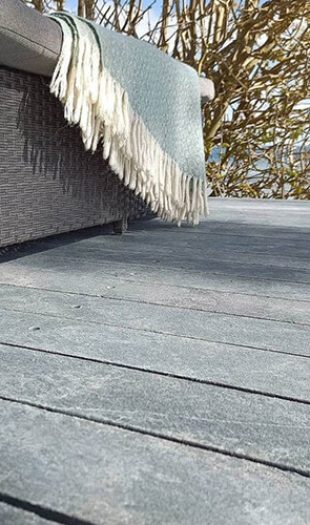
Retextil façade cladding combines a modern, uniform appearance with a long service life and minimal maintenance.
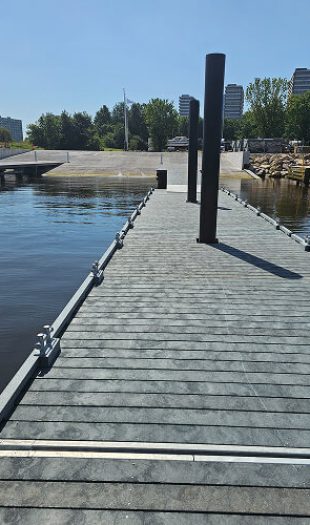
The material is resistant to moisture and weather and requires neither painting nor treatment. A reliable choice with a lower climate footprint.
Applications
Robust façade cladding with a low climate footprint
Retextil façade cladding combines a uniform architectural expression with high durability and minimal maintenance.
The material is made from recycled textile waste and is not affected by moisture, rot, or changing weather conditions. This makes it suitable for both new builds and renovations where reliability and documentation are essential.
Answers to questions about façade cladding made from recycled textiles – from construction and installation to service life and maintenance.
1. What are the advantages of Retextil for façade cladding?
Retextil combines a uniform architectural expression with high durability and minimal maintenance. The material requires neither painting nor treatment and retains its appearance over time.
2. How does the material perform in the Danish climate?
Retextil is resistant to moisture, frost, and temperature fluctuations. It does not warp and does not degrade like traditional materials, making it suitable for exterior façade applications.
3. Does Retextil façade cladding require maintenance?
No – there is no need for ongoing treatment such as painting or impregnation. Standard cleaning is usually sufficient.
4. How does Retextil differ from timber cladding?
Where timber requires ongoing maintenance and can be affected by rot and moisture, Retextil is dimensionally stable and maintenance-free. This provides a more reliable solution over time.
5. Can the material be used for both new builds and renovations?
Yes – Retextil façade cladding can be used in both new construction and in the renovation of existing buildings where a durable, uniform solution is desired.
6. How is Retextil façade cladding installed?
The material is supplied in standard profiles that can be integrated into established construction principles, including ventilated façade solutions. Installation is typically carried out using well-known methods.
7. How is the material’s sustainability documented?
Retextil is made from recycled textile and plastic waste and can be included in projects with a focus on documentation and environmental requirements. Relevant data can be made available during the design phase.
8. Can the material be recycled after its service life?
Yes – Retextil can be re-granulated and used in new products. This makes the solution circular and relevant for construction projects focused on resource efficiency.
Consultation for projects focused on durability and documentation
Shall we help with your project?
We assist with everything from material selection and dimensioning to documentation and practical solutions. Whether you are a consultant, contractor, or developer, we would be pleased to have a non-binding dialogue.