


A NEW APPROACH TO TEXTILE WASTE
From textile waste to new materials
Textile waste is a growing challenge – both logistically and environmentally. Retextil manages the entire value chain from sorting to recycling and helps municipalities and businesses turn waste into new materials.
6.4 million
tonnes of EU textile waste each year
1.4 tonnes of CO₂
per tonne of textiles when incinerated
100%
raw material from waste
2025
new EU requirements for handling textile waste
tonnes of textile waste handled for sorting and recycling – from small businesses to large municipalities.
The result is solutions that can be implemented in practice and documented thoroughly.
2,600 tonnes of CO₂ saved
HOW WE WORK
Efficient sorting of textile waste
How does Retextil work?
Retextil handles textile waste from sorting to recycling.
We use, among other things, NIR scanning to identify materials with high precision and ensure optimal utilisation.
How are the textiles sorted?
The textiles undergo a combination of technology and manual sorting.
This ensures high precision and makes it possible to separate the materials by quality and application.
What do the textiles become?
The sorted materials are used in new products – including building materials.
In this way, waste becomes a resource with new value.


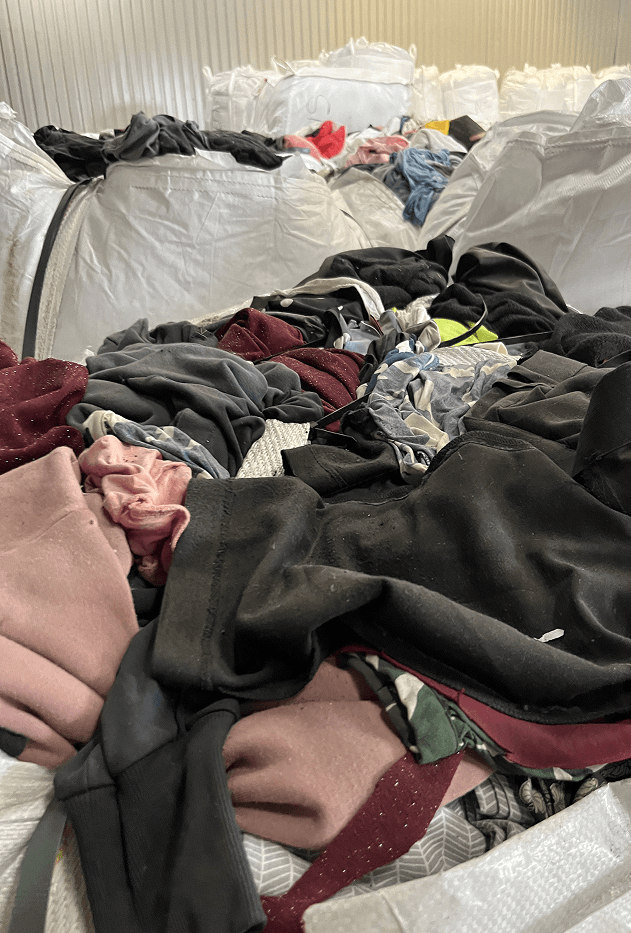
FROM WASTE TO MATERIALS
From textile waste to new materials
High-quality sorting
The textiles are sorted with high precision using technology and manual inspection.
This ensures consistent materials that can be used directly in new products.
Separation into usable materials
The materials are separated by type and quality so they can be used for different purposes – from reuse to new materials.
The focus is always on preserving as much value as possible in the textiles.
New products and materials
The sorted textiles are used in new products – including building materials.
In this way, waste becomes a resource with real-world use.
AN INTEGRATED SOLUTION
We manage the entire value chain
We help municipalities and businesses manage textile waste – from collection and sorting to new applications in building materials. Textile waste is a growing challenge, with large volumes currently ending up in incineration. With Retextil, the waste instead becomes a resource that is part of a documented and traceable value chain. We manage the entire process and ensure that the materials get a new life with a long service life.
Logistics
Collection and transport tailored to your needs and volumes.
Dialogue
Close collaboration and direct contact with our experts
Implementation
We help establish an effective solution – from start-up to operations.
Documentation
Traceability and data that comply with current EU requirements.
Circular recycling
Textile waste is converted into new materials – including for construction.
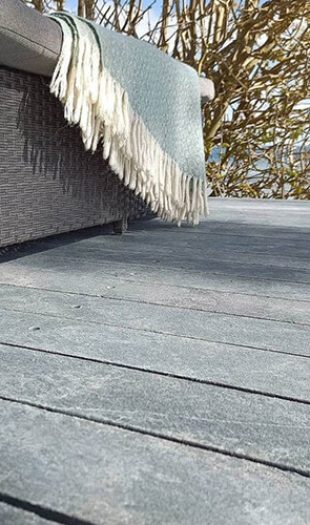
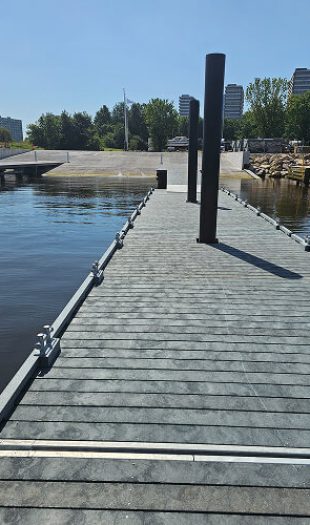
FROM WASTE TO APPLICATION
From textile waste to new solutions
The sorted textiles are converted into new materials with practical applications. Today, they are used, among other things, in building materials such as surfacing, cladding and structures, with a focus on durability and circular value.







FAQ
Frequently asked questions
There are many questions about new materials – and that makes perfect sense. Here we have gathered answers to the most important questions about Retextil’s building materials, so you can quickly learn more about properties, applications and documentation.
What happens to textile waste today?
A small portion of textile waste is reused, but the vast majority ends up as waste today – often for incineration or export without genuine recycling.
This is due, among other things, to the fact that much textile waste is mixed, worn, or consists of materials that are not suitable for traditional textile-to-textile recycling.
At the same time, new EU requirements for separate collection place greater demands on how the waste is handled and documented.
Therefore, there is a need for solutions that can handle large volumes of textile waste in practice – and ensure that the material is actually used again.
Which types of textile waste can be included in the solution?
Retextil works with the types of textile waste that are typically difficult to reuse or recycle in the traditional way.
This may include:
- blended textiles (e.g., cotton/polyester)
- worn or damaged textiles
- production offcuts
- textiles with no resale value
What these materials have in common is that they are not suitable for direct reuse or textile-to-textile recycling.
By entering a new value chain, these materials can instead become stable, long-lasting building materials.
This makes the solution relevant for the largest share of textile waste – not only the best fractions.
How is textile waste handled at Retextil?
Textile waste is handled in a coherent process from collection to finished building material.
First, the textiles are collected through existing collection schemes.
They then undergo a coarse sorting in Denmark, where reusable material is separated out.
The remaining textiles are fine-sorted by fibre type and quality before being processed into a granulate.
The granulate is used as a raw material in the production of new building materials through an extrusion process.
The entire process is designed to handle large volumes and ensure consistent quality in the finished material.
What happens to textiles that can be reused?
Textiles that can be reused directly are separated out early in the process.
This may include, for example, clothing and textiles that still have use value and can be sold or used again.
Retextil does not work with these materials, but with the share of textile waste that is not suitable for reuse or textile-to-textile recycling.
In this way, the solution complements existing reuse streams – and ensures that a larger share of total textile waste gains a new application.
How is the handling of textile waste documented?
Documentation is a central part of the solution.
Retextil works with traceability throughout the entire value chain – from collection and sorting to production and finished material.
This makes it possible to document:
- where the material comes from
- how it has been processed
- what it becomes
The documentation can be used both for internal management and for municipal reporting in relation to applicable requirements and targets. It provides a transparent basis for working strategically with textile waste as a resource.
Can textile waste be recycled again after use?
The materials are developed for a long service life in their application.
After use, they can enter new material streams, depending on application and handling.
Retextil’s approach is based on cross-cycling – where materials are used where they create the most value, and where opportunities for further recycling are continuously developed.
What volumes of textile waste can be handled?
Retextil’s solution is designed to handle large volumes of textile waste.
Capacity depends on the specific solution and form of collaboration, but the approach is scalable and can be adapted to both smaller and larger municipal schemes.
This makes it possible to work with textile waste as a stable waste stream – even as volumes grow.
How do you collaborate with Retextil?
Collaboration with Retextil is based on the existing collection solution.
We typically enter into dialogue about how the textile waste can be handled further in the value chain – including sorting, documentation and application.
The solution is tailored to each municipality or stakeholder and is built on collaboration with the existing links in the waste system.
Start a dialogue with us
Are you considering using the material in a project?
Then it makes sense to start the dialogue early.
We help assess applications, solutions and documentation – so you can move forward on an informed basis.