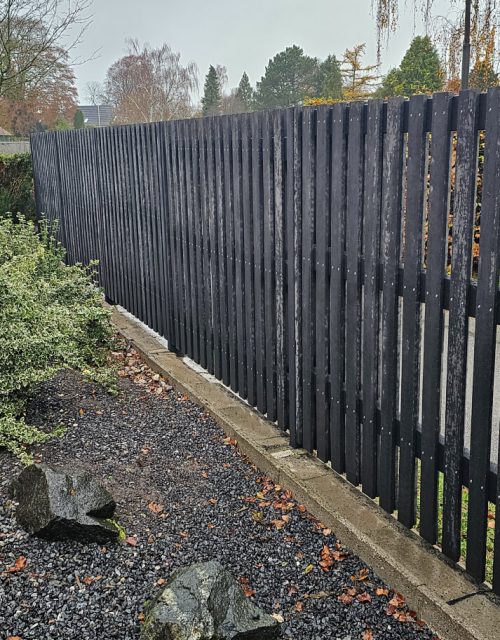
Strong fencing solutions with no maintenance – made from recycled materials
Fences and railings are exposed daily to wind, weather, and wear. With Retextil, you get a solution that lasts – without ongoing maintenance.
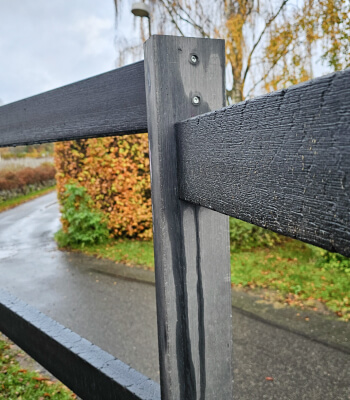
The material is made from recycled textile and plastic waste and requires no paint, oil, or impregnation. It is dimensionally stable, moisture-resistant, and developed for many years of outdoor use.
The result is a robust, uniform look – with a significantly lower carbon footprint than traditional materials.
Standard profiles. Fast delivery. Minimal maintenance.”
Maintenance-free fencing solution – ready to install
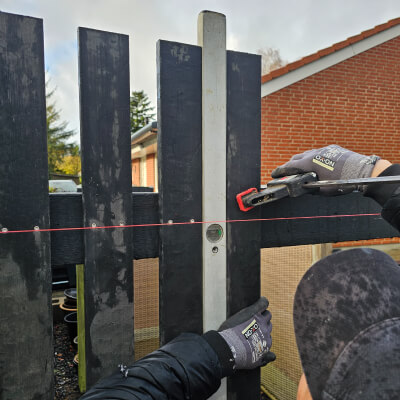
Retextil fences and railings are supplied in standard profiles that are easy to work with and ready for installation.
Whether you work on residential projects, commercial developments, or public-sector solutions, you can quickly find the right option – or get advice for your project.
Retextil is not affected by moisture in the same way as wood and does not change shape when shifting between wet and dry conditions. This provides a stable solution that retains its appearance over time – also in the Danish climate with rain, frost, and temperature fluctuations.
Do Retextil fences and railings require maintenance?
The material requires no paint, oil, or other ongoing treatment. The surface can be cleaned as needed, but no maintenance is required to preserve function and service life.
Where can the material be used?
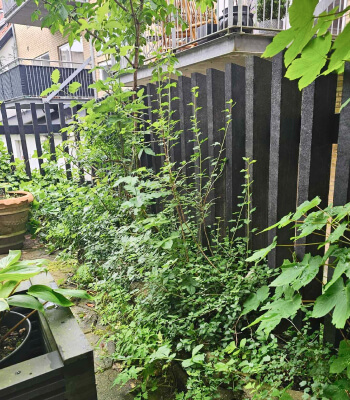
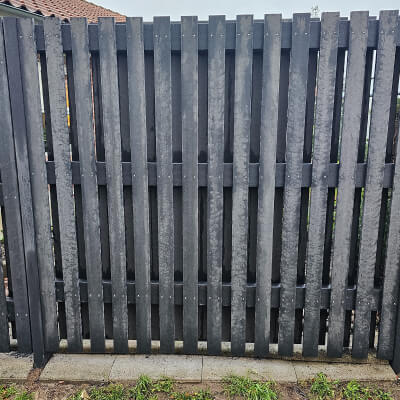
Retextil can be used for both classic railing solutions, garden screening, and larger projects in residential areas or public spaces. The material is suitable where a robust, uniform solution with a long service life is required.
Recycling
0%
waste-based
Additives
0%
added
FAQ
Frequently asked questions
Considering Retextil fencing or railings? Here you will find answers to the most important questions – before you get started.
1. What are the benefits of Retextil for fences and railings?
Retextil provides a maintenance-free solution with a long service life. The material requires no paint, oil, or impregnation and retains both strength and appearance over time – even in exposed outdoor environments.
2. How does the material handle Danish weather?
Retextil is developed to withstand rain, frost, and temperature fluctuations. It does not warp like wood and is moisture-resistant, ensuring stability year after year.
3. Do Retextil fences need maintenance?
No – regular cleaning is usually sufficient. There is no need for ongoing treatment, which reduces both operating time and costs.
4. How does durability compare with wooden fences?
Retextil has a longer service life than traditional wooden fences in outdoor environments. It is not affected by rot, fungus, or splintering and does not require replacement to the same extent.
5. Is the material suitable for both private and professional projects?
Yes – Retextil is used in private gardens, housing associations, and larger public projects where operational reliability and consistent quality are essential.
6. How are Retextil fences and railings installed?
The material is supplied in standard profiles that are easy to work with and can be integrated into existing solutions. Installation in many cases is similar to traditional fencing systems.
7. How does Retextil affect the carbon footprint?
The material is made from recycled textile and plastic waste and contributes positively to reducing the amount of waste sent for incineration. At the same time, it avoids chemical treatment, which is often used for wood.
8. Can the material be recycled after use?
Yes – Retextil can be re-granulated and used in new products. This makes the solution circular and relevant in projects focused on sustainability and documentation.
Do you have questions?
If you have questions about the process or the materials, you are always welcome to contact us
We help clarify options, requirements, and solutions – from the first idea to practical application. Contact us if you would like to learn more.