


Building materials — 100% recycled textile waste
Textile waste for fine sorting and recycling
We transform textile waste into durable building materials through a proven and scalable process that can handle large volumes and be established quickly. The result is a circular alternative to traditional materials—without compromising on quality or performance.

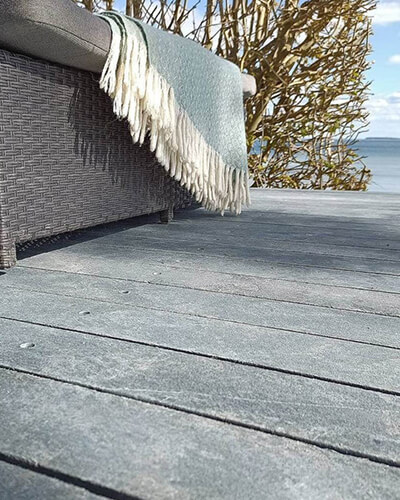
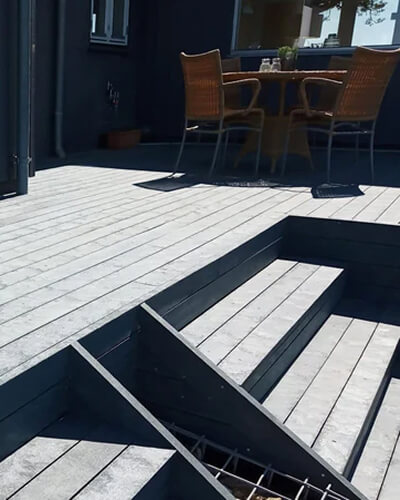
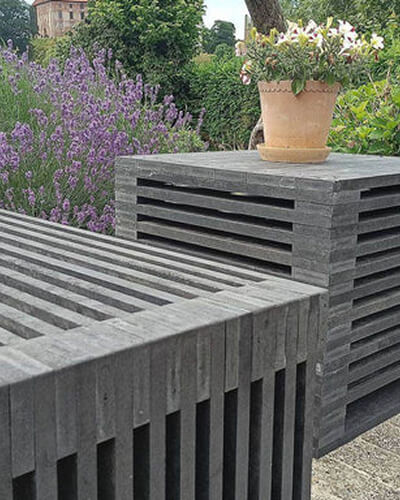

The process — From textile waste to 100% recycled building material
We make it simple for our customers by managing the entire process—from waste to finished material. We manage the entire value chain—from collection and coarse sorting in Denmark to fine sorting and further processing in Europe. Textile waste can become insulation, building materials, outdoor spaces and interior elements—creating new value instead of going to waste.
Building materials — 100% recycled textile waste
A new material—with familiar properties
Retextil materials combine high wear resistance with documented resource efficiency and a long service life. The material requires minimal maintenance and can be used in both small and large projects.
We work with textile waste across the entire value chain—from sorting to new materials—and have experience with both companies and municipalities.
The result is solutions that can be implemented in practice and documented end to end.
Materials
Materials developed for real-world use
Retextil materials are developed to last—with a focus on strength, stability and circular use.
Stable, shape-retaining material
Minimal movement and high dimensional stability—even in changing weather conditions.
Without binders
Manufactured without added binders—a pure and thoroughly tested composite material.
High wear resistance
Robust surface and long service life—suitable for both public and private environments.
Designed for circularity
Can be re-granulated at end of use and incorporated into new products. Developed to work in practice—not only in theory.
OUR MISSION
We enable textile waste to be managed at scale—with solutions that can be implemented in practice and documented end to end.
We work with cross-cycling: where textile waste is not returned to textiles, but transformed into new materials with a long service life and high functionality.
The result is solutions where waste becomes insulation, building materials, outdoor spaces and interior elements.
- No additives
- *
- SCALABLE CAPACITY
- *
- RAPID IMPLEMENTATION
- *
- DOCUMENTED PROCESS
- Produced in the EU
- *
- Maintenance-free
- *
- Global patent
- *
- 100% waste-based
From textile waste to circular construction
Mos Mosh x Retextil
From leftover textiles to finished building materials—see how Mos Mosh partners with Retextil to create tangible solutions in practice.
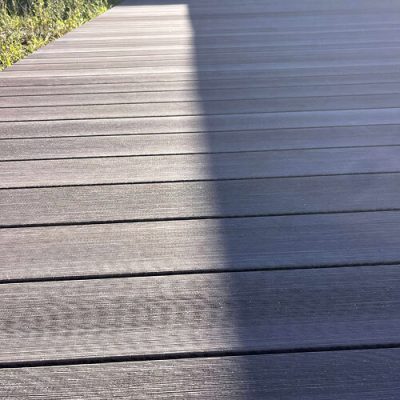








Applications
Why companies and municipalities choose Retextil
What is the material made of?
How durable is it?
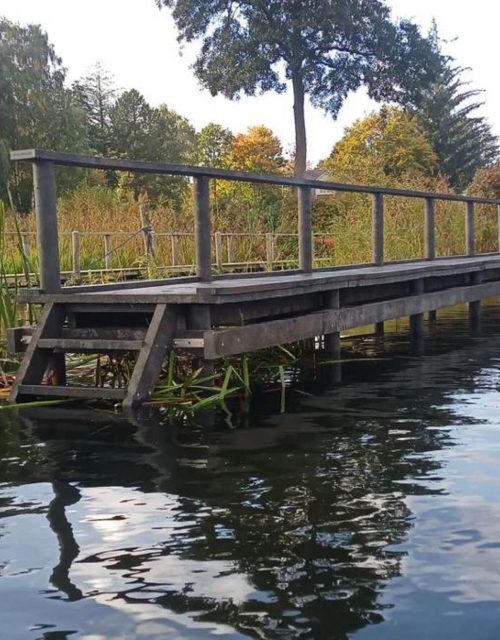
The material is designed for a long service life and demanding outdoor environments. Its strength is comparable to hardwood. It requires minimal maintenance and has high wear resistance.
How does it differ from wood and composite?
Retextil combines stability and durability with a lower climate footprint and the option of recycling at end of use.
Can you handle large volumes of textile waste?

Experience
Sample Subtitle
Experience
Sample Subtitle
FAQ
Frequently asked questions
Get answers to the most important questions about textile waste, handling, and how the material can be given new life in construction.
1. What happens to textile waste today?
A small portion is reused, but the vast majority is either exported, incinerated or landfilled. This applies especially to textiles that cannot be resold as second-hand.
2. What types of textile waste do you work with?
We work with textiles that are not suitable for reuse—for example blended materials, surplus lots and worn-out textiles.
These are typically textiles where materials are mixed, or where quality has deteriorated, so they cannot be recycled into new clothing.
Why is textile waste not simply recycled into new clothing?
Some textiles are reused, but the vast majority cannot be turned into new clothing today. This is due, among other things, to material blends and limitations in current technology.
Therefore, it is necessary to find other applications where the material can be used for many years—for example in building materials.
4. What happens to the textiles once they are collected?
The textile waste is collected and coarsely sorted in Denmark. It is then transported to specialized facilities in Poland, where it is fine-sorted and prepared for the next step of the process, in which it is transformed into new materials.
5. What does “cross cycling” mean in your process?
Cross cycling means that the textiles are not recycled into new textiles, but instead are given a new function in a different application. In our case, textile waste is transformed into building materials with a long service life.
This is particularly relevant for textiles that are not suitable for textile-to-textile recycling, for example due to material blends or wear. By using the material in construction, resources are utilized further in a stable and durable form.
6. Do you add chemicals or binders in the process?
No. The material is produced without the addition of binders, UV stabilizers or other additives.
Instead, the existing properties of the textile and plastic materials are utilized, which are bonded together through heat and pressure to form a homogeneous composite material. This results in a uniform product without the need for chemical additives and with a stable structure suitable for outdoor use.
7. Can you document the origin of the materials?
Yes. We work with traceability in the value chain and can document material flows from collection to finished product.
8. Who is the solution relevant for?
The solution is relevant for both municipalities and companies that want responsible handling of textile waste while also contributing to new material streams.
Contact us
Ready to work with Retextil?
We support companies, municipalities and retailers with textile waste and new building materials.
Get in touch with us—and we will find the solution that suits you.