


BUILDING MATERIALS MADE FROM RECYCLED TEXTILES
Recycled building materials, built to last for generations
Durable composite materials made from recycled textile waste. Maintenance-free, without additives, and developed for a long service life. Used for everything from decks and fences to façades and structures. Used in both municipal and private projects.
6.4 million
tonnes of textile waste are generated annually in the EU
1.4 tonnes of CO₂
saved per tonne of textile recycled
Kiwa certified
documented quality and durability
0 additives
no binders or UV stabilisers

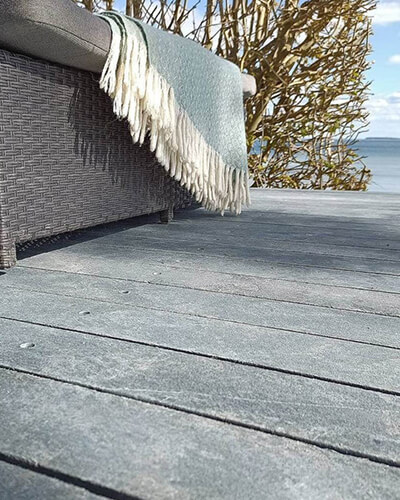
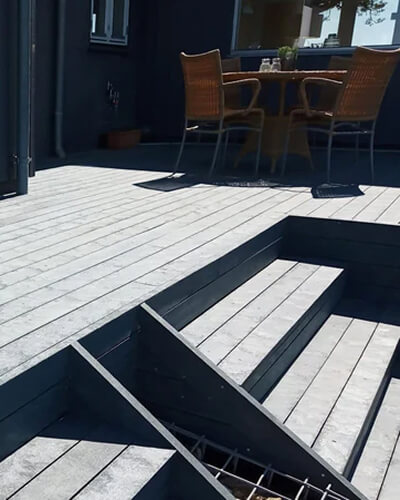
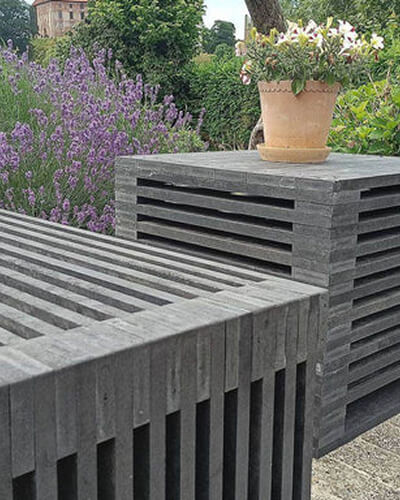

- No additives
- *
- Global patent
- *
- Service life for generations
- *
- Produced in the EU
- Produced in the EU
- *
- Maintenance-free
- *
- Global patent
- *
- 100% waste-based
Applications
What would you like to build?
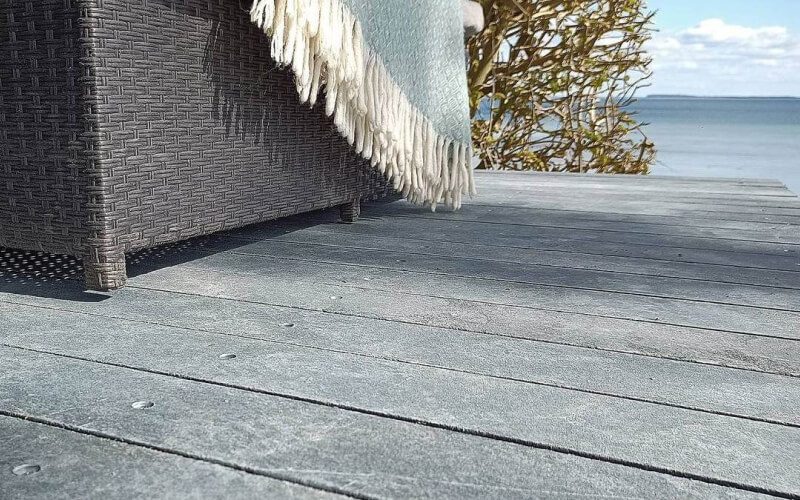
Decking
Durable decking material made from recycled textiles. A strong alternative to wood. Developed for outdoor use with low maintenance and a smaller climate footprint.
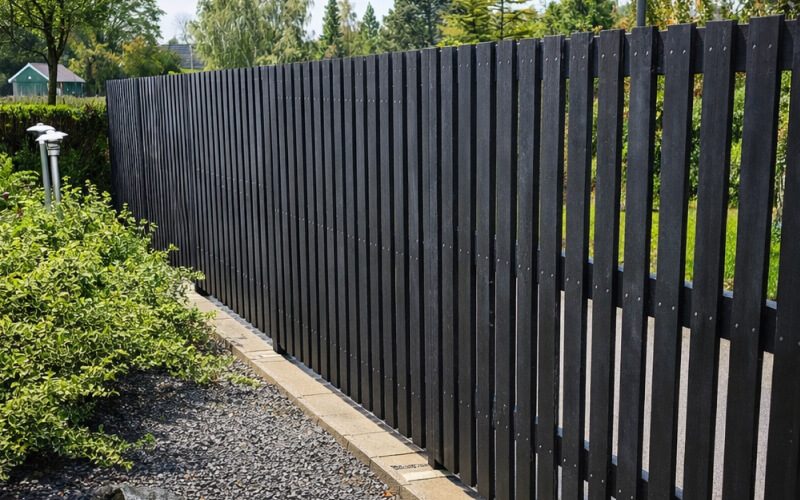
Fences & Railings
Strong, maintenance-free fencing solutions made from recycled textiles. Designed for a long service life and a clean, modern look.

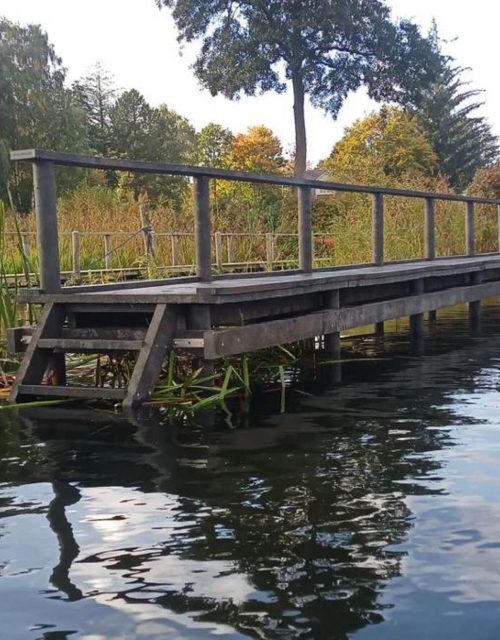
Bathing Jetty & Harbour
Hard-wearing materials for bathing jetties, harbour environments, and structures close to water. Resistant to weather, wind, and daily use.

Façade cladding
Façade cladding made from recycled textiles with a robust, architectural expression. Durable material with low maintenance and a clear circular profile.
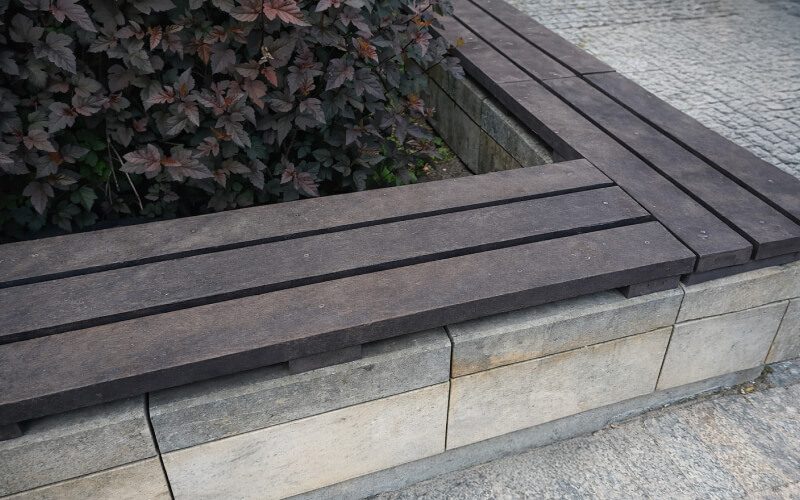
From textile waste to building material
We transform textile waste into durable building materials through a documented, circular process.
Textile waste does not need to end up as waste. Through a controlled and documented process, it is converted into durable building materials with consistent properties and a long service life. The process ensures full traceability from collection to finished product and makes it possible to use the material in professional solutions where quality and stability are essential. See the process step by step below
Textile waste is collected from EU companies
Full documentation and traceability across all material flows
Sorted and downcycled — no additives are added
The only composite material in its class without a binder
Extruded into profiles and building materials
Minimal expansion — handled like exotic hardwood
Delivered ready to use — service life for generations
Re-granulable at end of use — circular economy
Properties & application
A material like no other
What makes the material unique?
Made from textile and plastic waste without added binders or additives. Consistent properties and high durability – even in demanding environments.
How is it documented?
Full traceability in the value chain, as well as documentation of the material’s properties and its use in construction.
Where can it be used?
From fences and façades to bathing jetties and decks – developed for both public and private projects.

Retextil
recycled raw material
Retextil
additives

Examples in practice
From textile to decking – what it looks like in real life
The material is used in both design and construction projects where requirements for durability and circularity go hand in hand. Here is an example of how textile waste is given new life in practice.
The material in practice
A building material with a different background
Retextil’s materials are made from textile waste that cannot be reused in its original form.
Through sorting, processing, and production, it is transformed into a stable composite material that can be used in both outdoor and indoor solutions.
This means waste becomes a resource – without compromising function or durability.
When working with new materials, questions naturally arise.
How does it perform in practice?
How long does it last?
How is it documented?
Here we have compiled answers to the most common questions about the material, its applications, and the process.
FAQ
Frequently asked questions
There are many questions about new materials – and that makes perfect sense. Here we have gathered answers to the most important questions about Retextil’s building materials, so you can quickly learn more about properties, applications and documentation.
What are Retextil building materials made of?
Retextil building materials are produced from recycled textile waste and plastic film. The material is extruded without the use of binders or chemical additives, resulting in a homogeneous and stable composite material.
How does Retextil differ from wood and other composite materials?
Retextil combines the strength of composite materials with consistent quality that is not affected by moisture, rot, or splintering. Unlike many other composites, no additives are added during production.
What applications is the material suitable for?
The material is typically used for decks, fences, façades, bathing jetties, and other outdoor structures where durability and minimal maintenance are required.
Does Retextil require maintenance?
No. The material is maintenance-free and requires neither oil, paint, nor impregnation. This makes it particularly suitable for projects where operation and service life are critical.
What is the material’s service life?
Retextil is developed to have a long service life – even in demanding environments. The material is not affected by moisture and does not degrade like traditional wood.
How is the material handled during construction?
Retextil can be worked with standard tools and installed in the same way as wood. This makes it easy to work with for both professionals and contractors.
Is the material documented and traceable?
Yes. The entire value chain is documented, and the material flows are traceable from collection to finished product. This supports sustainability and certification requirements in construction projects.
Can the material be recycled again after use?
Yes. Retextil materials can be re-granulated and used in new products at the end of their service life, supporting a circular material flow.
Start a dialogue with us
Are you considering using the material in a project?
Then it makes sense to start the dialogue early.
We help assess applications, solutions and documentation – so you can move forward on an informed basis.