


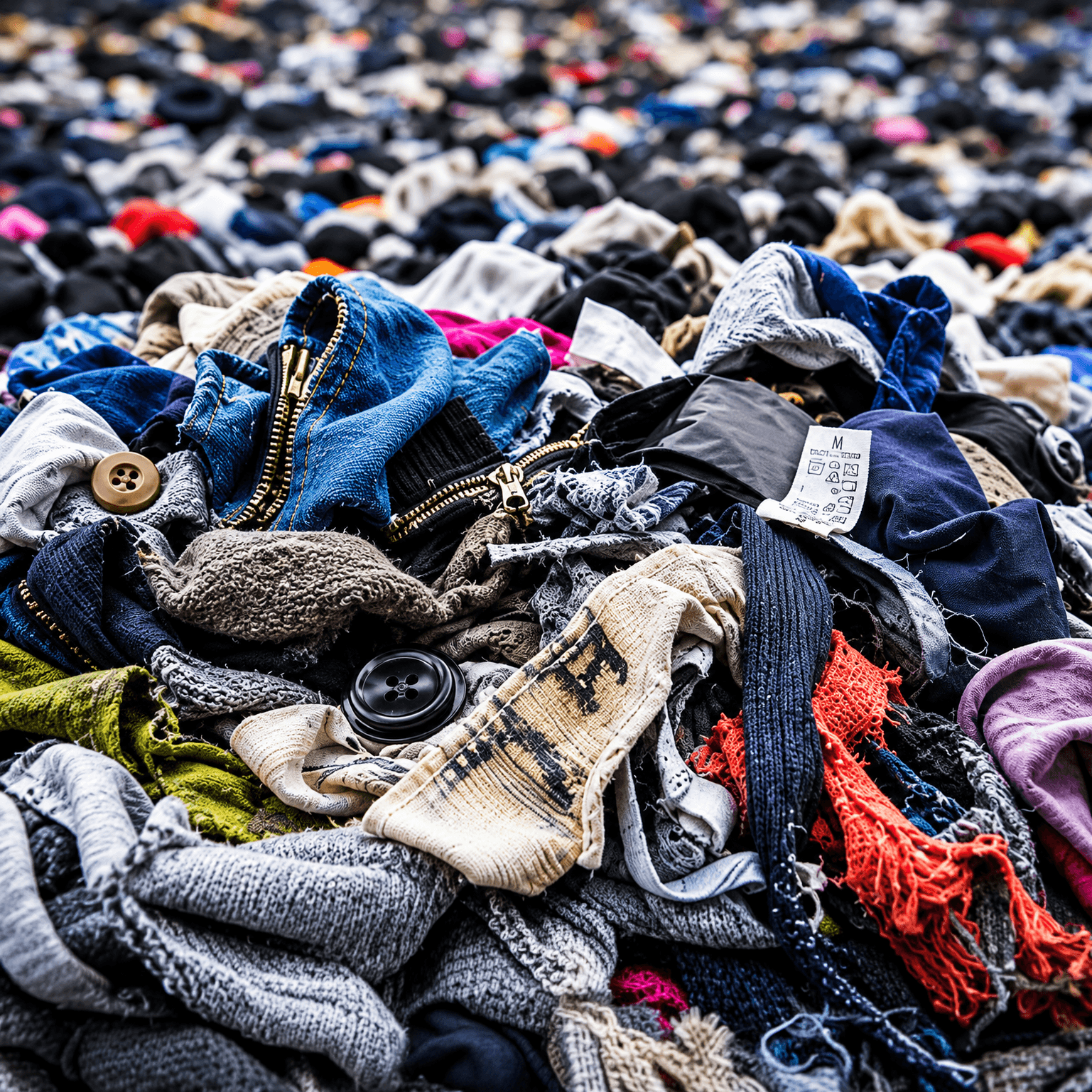
Textile waste differs from many other types of waste.
Where materials such as cardboard, metal, plastic and steel can often be sorted into relatively uniform fractions and sold on in established markets, textile waste is far more heterogeneous.
It does not consist only of clothing. It can also include rags, workwear, industrial textiles, upholstery textiles, blended materials and worn products with buttons, zips, coatings, prints and other components.
This makes handling more complex – and often also more cost-intensive.
Before textile waste can be given new life, it typically needs to be collected, sorted, assessed and processed in more detail than many other waste streams. Some can be reused directly. Some can be recycled into new textiles. But a large share is not suitable for textile-to-textile recycling.
Therefore, more solutions are needed.
At Retextil, we work with the part of textile waste where direct reuse or textile-to-textile recycling is not realistic. Instead, textiles can be incorporated into new materials and have a long, practical life in, among other things, building materials.
This is not an alternative to reuse when reuse is possible. It is an alternative to incineration when the textiles can no longer be used as textiles.