


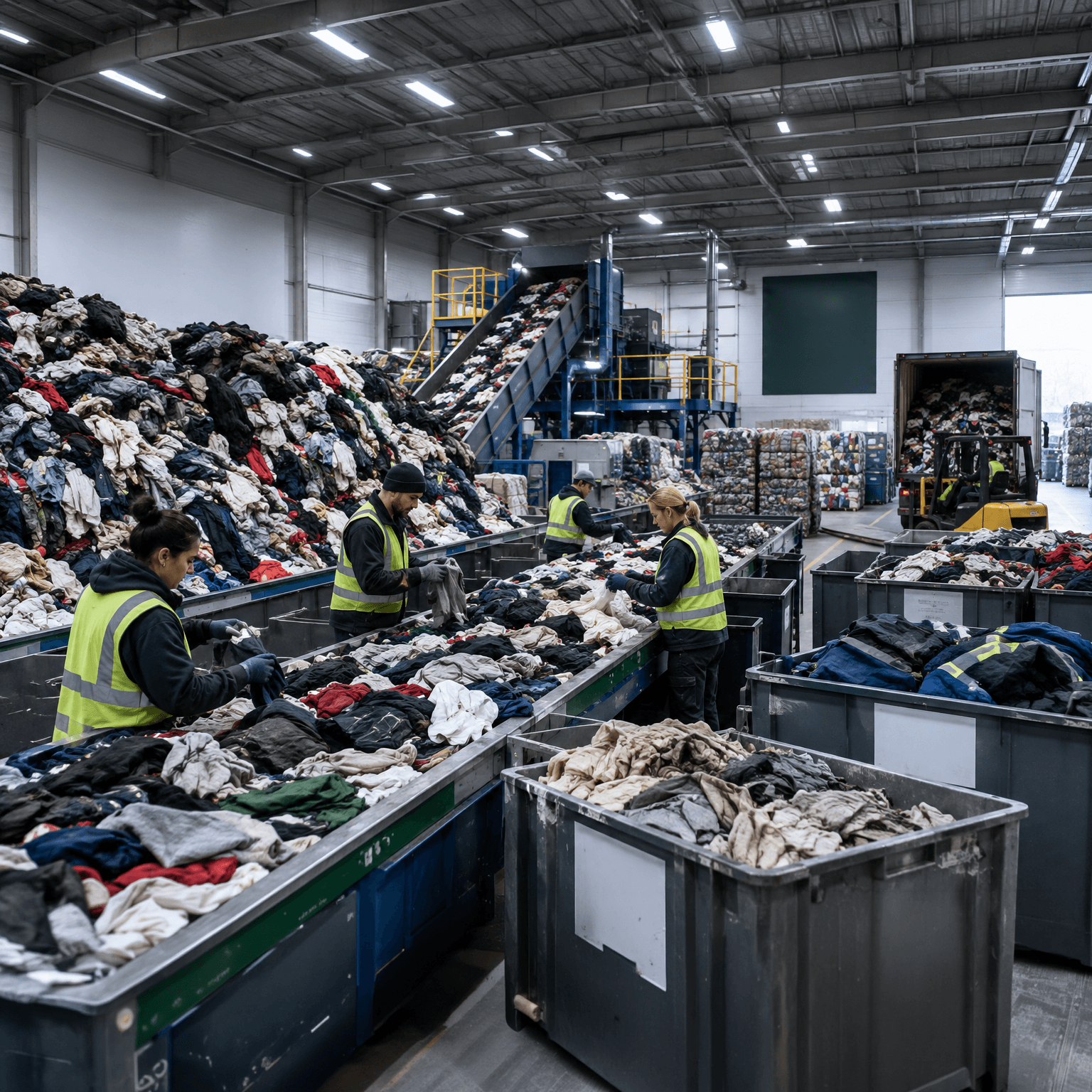
Textile waste is not only a local or national challenge. It is a global waste stream on a very large scale.
In an article from Forbes:
https://www.forbes.com/sites/eshachhabra/2026/07/30/can-brands-create-a-circular-system-for-the-massive-clothing-waste-problem/
the spotlight is placed on precisely the part of the textile-waste agenda that often receives less attention than the big ambitions of the circular economy: What actually happens to textiles once they have become waste?
It is an important question.
According to Forbes, around 92 million tonnes of textiles are discarded globally each year. At the same time, only a very small share of used textiles is still turned into new textiles again.
That makes the question less theoretical and far more practical.
Because textile waste does not become circular by itself. There is substantial work in between.
Collection. Sorting. Assessment. Documentation. Economics. Offtakers. New applications.
It may not be the part of the circular economy that dominates public debate. But it is often where the difference is made.
Many textiles can be reused directly. Others can be recycled into new textiles. But a large share of textile waste consists of mixed fibres, worn materials, workwear, rags, industrial textiles, and textiles with buttons, zips, coatings, and other components.
That type of waste requires different solutions.
Because if the ambition is to move more textile waste away from incineration and into new loops, it is not enough to talk about the vision. We also need to talk about the practical work and the economics required to make it happen.
At Retextil, we work with the part of textile waste where direct reuse or textile-to-textile recycling is not realistic. Instead, textiles can be incorporated into new materials and have a long, practical life in, among other things, building materials.
The Forbes article is interesting because it confirms an important point: Textile waste is not automatically a resource just because we call it one.
It requires sorting, technology, documentation, offtakers, and new applications.
That is where much of the work lies.