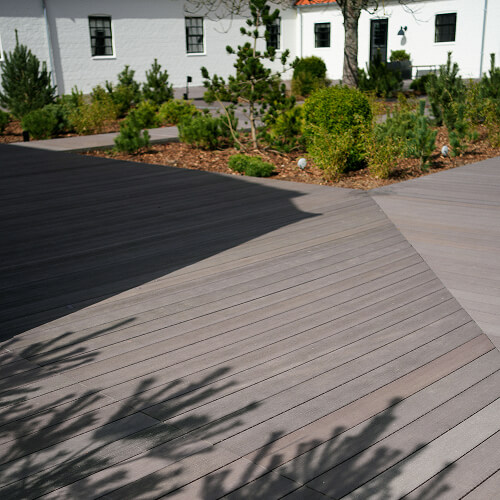
From collection samples to a circular outdoor space

Mos Mosh x Retextil

How can a company’s own textile waste become a functional and durable outdoor space? Together with Mos Mosh, Retextil has transformed discarded product samples into a fully established courtyard area—making the circular economy tangible and visible in practice.

Mos Mosh x Retextil8
Mos Mosh x Retextil6

Case

In 2025, Mos Mosh and Retextil entered into a partnership with one clear goal: to find a practical use for the company’s own discarded textiles.

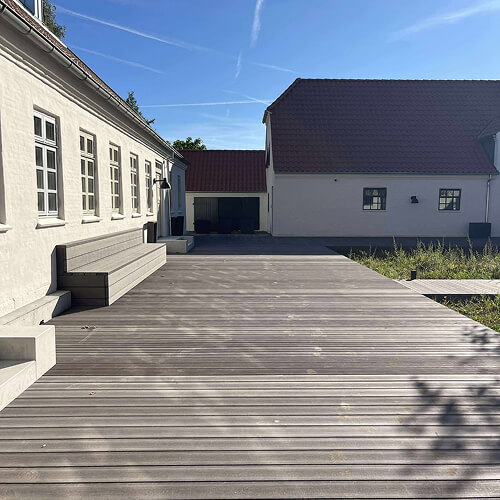
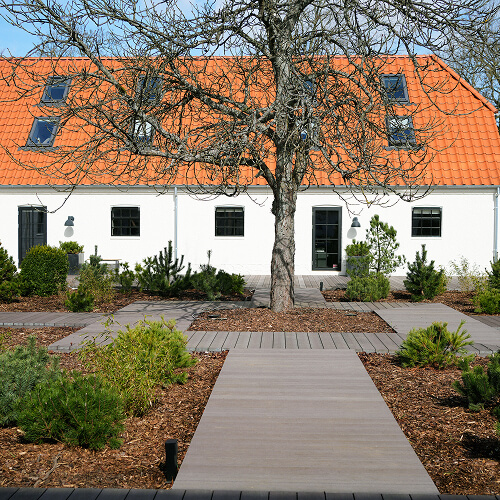
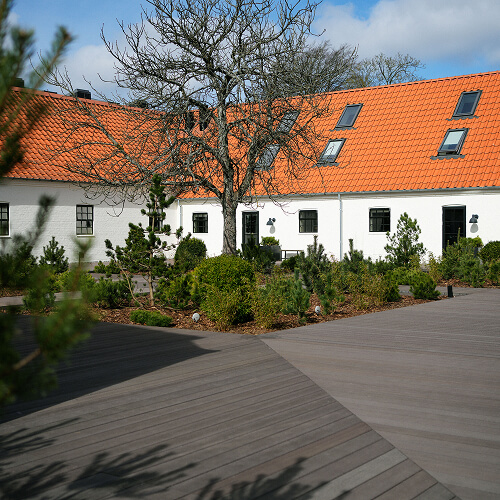
The result is a 500 m² circular courtyard area at the headquarters, where materials made from Mos Mosh’s own product samples are an integrated part of the design.

01.

Starting point

In connection with handling collection samples, Mos Mosh had 5,540 kg of textile waste that could not be reused as clothing.

Instead of sending the material for incineration, the company wanted to find a solution that:

• gave new life to its own textiles

• documented a real environmental impact

• created a physical and visible ESG solution

Retextil was chosen as the partner.

02.

The solution

Retextil managed the entire value chain—from processing textile waste to the finished outdoor space.

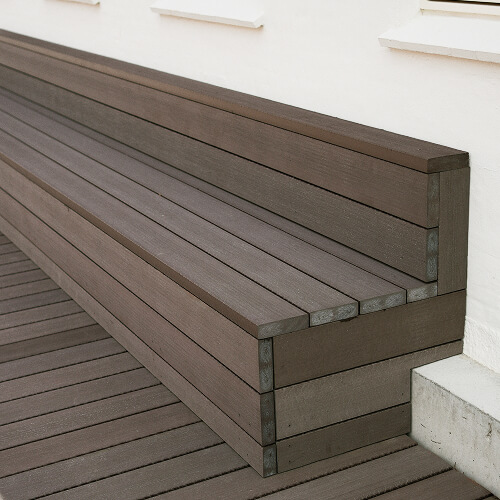
The textiles were transformed into a composite material consisting of:
• 60% textile fibres
• 40% recycled plastic (PE/PP)
• 0% new chemical binders

The material was then used to manufacture and install the entire outdoor area.

03.

The finished project

The result is a complete 500 m² outdoor area at Mos Mosh’s headquarters.

The area includes, among other things:

• terrace in slip-resistant R11 quality
• lounge and courtyard spaces
• fencing and screening
• integrated environmental elements

The same material is used throughout the entire area, creating a consistent look and a reliable solution in operation.


Today, the courtyard garden is actively used as a lounge and meeting space for employees.

04.

The documented impact

The project is based on documented environmental data and third-party verification.

Key results include:

• 5,540 kg of textile waste diverted from incineration
• 8,869.5 kg CO₂e saved compared to incineration
• 0% new chemical binders
• EPD-certified material (ISO 14025 / EN 15804)

The entire value chain is traceable—from textile waste to finished construction.

05.

Perspective

The Mos Mosh case shows that textile waste doesn’t have to end up as waste.

With the right process, the material can be used in new solutions—both in small projects and at scale.

This opens up a completely new way of working with textile waste—where the value is retained instead of being lost.

Ready to take the next step?

Do you want to work with textile waste in practice?

We help companies and organisations turn textile waste into tangible solutions—from the first considerations to the finished project.

Get in touch if you’d like to hear what a solution could look like in your organisation.

Scroll to Top